
Unrefined Behaviour
Offshoring refining decreases energy security - who knew?

Whilst most analysts are focusing on crude oil and LNG - the impact of reduced supply will be felt at the petrol station. We use refined products not crude oil, but in the modern world petrol (gasoline) magically appears by the tanker load and we carry on.
As an example, a recent post on X by @Rickaus75 (worth a read to see the extensive list of export products that would halt as/when Australia runs out of diesel).


The post highlights just how inscure Australia is with regards to refined products.
A quick search and it would appear that Australia can produce only about 20% of its needs from its two remaining refineries, and imports the other 80%.
As recently as the early 2010s Australia had around eight refineries, with capacity of 800,000 bopd. Currently it can refine about 240,000 bopd from the remaining two.
In normal times this is unremarkable, but we are not in normal times.
As the X post noted - in the case of Australia a fuel shortage would have immediate knock on effects in almost all areas of mining and exports of products the world needs. Second order effects leading to third order effects.
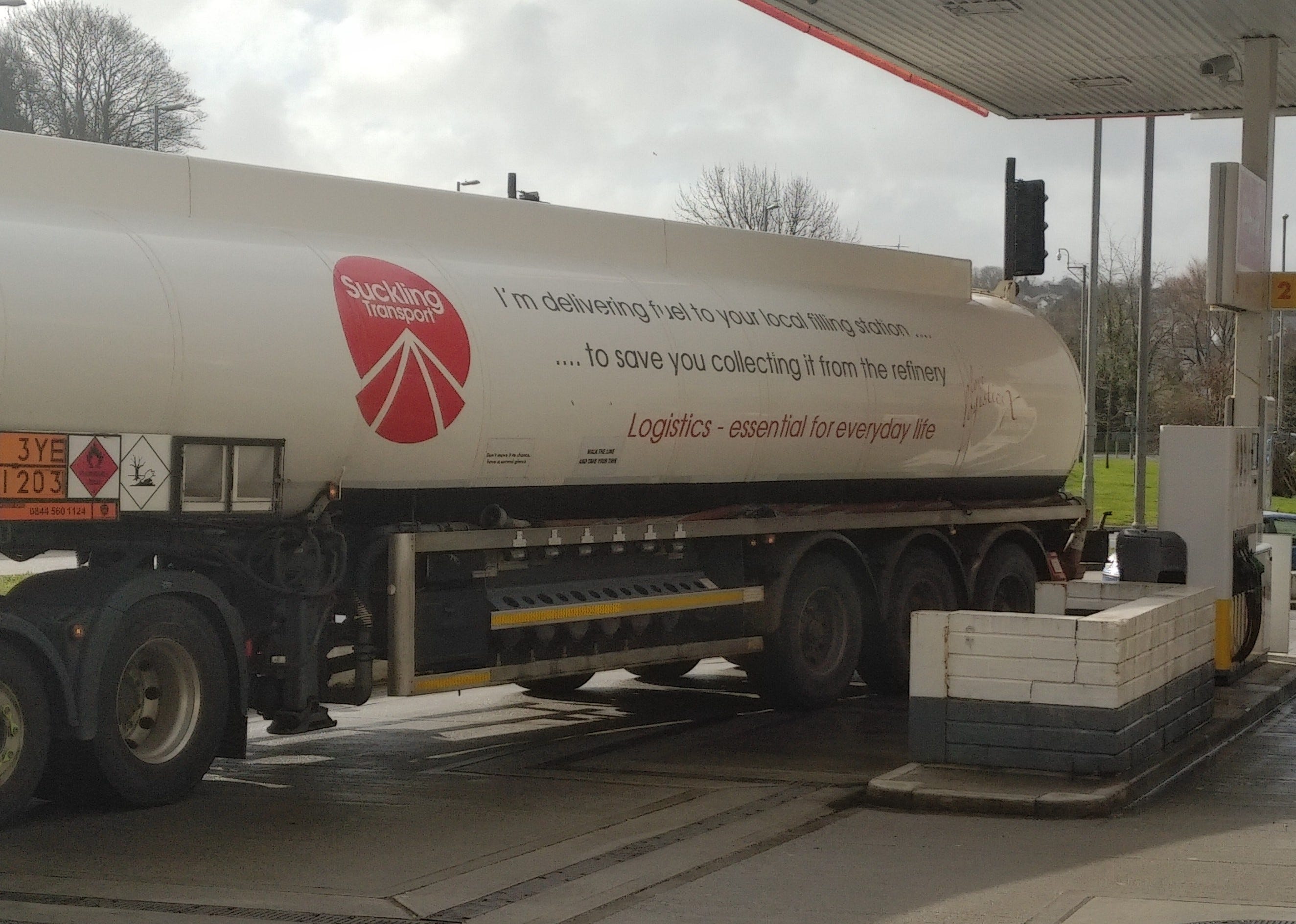
Lean and Mean
When they were built, many refineries in Europe, North America, and Australasia were large by the standards of their local markets, processing 100,000–200,000 barrels per day. Today, however, the global oil market has grown dramatically, and new mega-refineries in Asia and the Middle East, often 2–3 times larger and integrated with petrochemical complexes, can produce fuels much more cheaply.
As with most other aspects of globalization, the invisble hand was hard at work, with consumers enjoying the cheapest products, and politicians thinking about getting reelected, not about national energy security. For many industries the invisble hand meant offshoring labour. For others it meant offshoring envionmental costs and for refined products it meant losing energy security as imports came to dominate over domestic production.
Unable to compete at this scale, many older Western plants have closed, leaving domestic markets increasingly dependent on imports. Ireland and New Zealand no longer have any local refining capacity. Australia, as noted above, has reduced significantly. The UK has reduced from a peak of 2.1mm bopd to c. 1 mm bopd. France from 1.9 mmbopd to 1.2 mmbopd and so on.
For countries that don’t produce oil, one could argue that importing crude to be refined, or importing refined products has a similar security risk. However, importing crude and refining locally offers more flexibility and buffer, while relying on imported refined products exposes a country to greater short-term supply risk, even if total volumes are theoretically the same. A local refinery can be thought of as a “shock absorber” to supply side disruptions. It is notable in the press cuttings below that several coutries have continued to export crude, even as they close down exports of refined products (fuel).
The decline of Western refineries is a stark reflection of the prioritization of cost over security. This was a net positive, until it wasn’t.
The war in Iran has lifted the mask on the fragility of the refined products space. Jet fuels has soared (pun intended) in price, and countries are enacting, or thinking about, export restrictions.
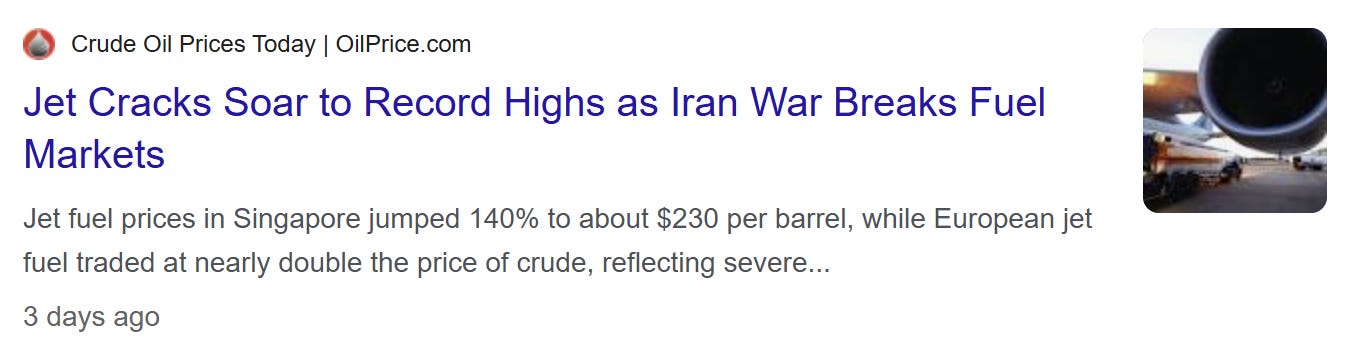
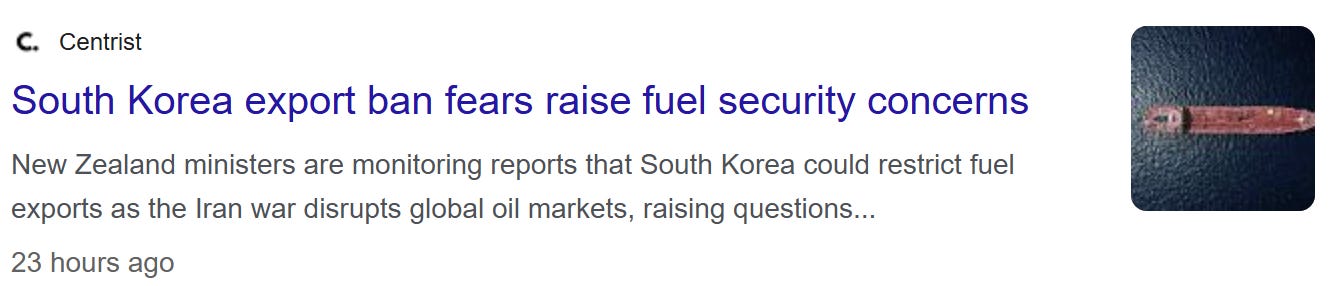

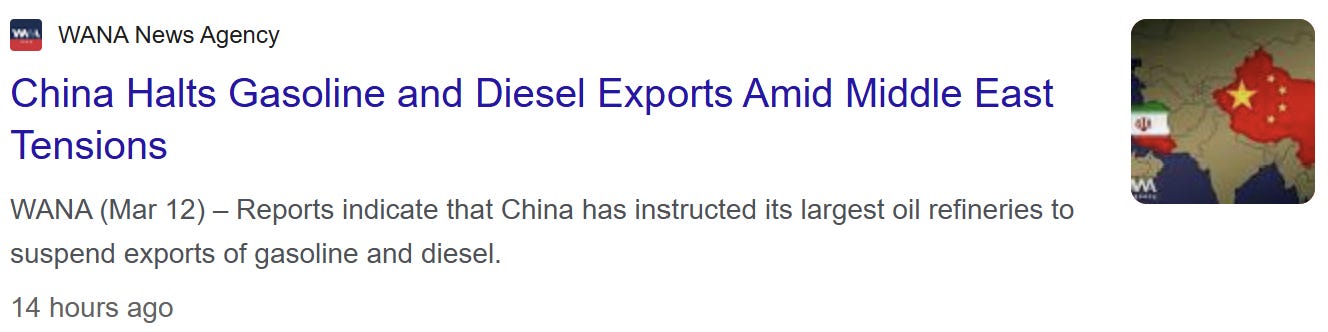
Of course the very large Middle East refineries that are the wrong site of the Strait of Hormuz are not exporting at all.
Beyond just the economic arguments of shutting smaller, less profitable local refineries - I am sure that there were two other key factors. The ever-present Political-Environmental-Green-Blob have longtimes hydrocarbons in their sights.
Firstly, because, well these are hydrocarbons and are thus the root of all evil, and
Secondly, because we will be 100% renewable by [pick your favourite date] and refineries will be stranded assets - so there is no point even thinking about maintaining them.
I honestly can’t be bothered to reserach this for a “short-form” article, but will leave this here as speculation.
I have no clue how this war will play out, but one can only hope that it is a wake-up call on energy security that goes beyond the knee-jerk “proof that we must just stop using oil and gas”.
Oh, what a tangled web we weave,
When first we practice to deceive!
Fortunately the US has avoided much (clearly not all) of this stupidity